Walk under the cliffs
The most interesting islands in the Baltic Sea

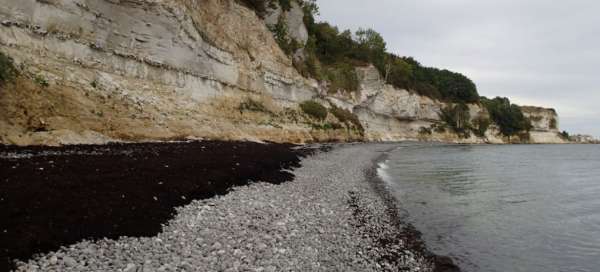
If there is a low tide, you can walk quite comfortably under the cliffs and at the same time be at a sufficient distance from the vertical walls. That the sea is slowly taking over the land is evident from the relatively numerous landslides and ruined parts of the rock walls.
Møn
White cliffs island
By far the biggest attraction of the island of Møn are the white chalk cliffs (Møns Klint) registered in UNESCO. But the information center GeoCentrum, built over the cliffs and informing about everything that one can think of local nature, is definitely worth a spectacle. However, there are also up to 4,000 years old and very interesting mounds and other megalithic buildings on the island. Impressively painted and maintained churches are a kind of Danish classic. continue reading


Gotland
The largest Swedish island
Gotland is an island with a rich and relatively unique history. It did not emerge from the Baltic Sea until a few thousand years ago, when a land glacier retreated from northern Europe and the sea thawed again. The island has been rising tirelessly since then, although its highest point is only 83 m. Hundreds of megalithic funerary ships testify to the settlement more than 4,000 years ago. In the Middle Ages, Hansa, a major trading company dominating the Baltic, was established here. Dozens of churches have hardly changed since the 14th century. continue reading


Öland
Even the agricultural landscape can be in UNESCO
The second largest island in Sweden, long as noodles, was created similarly to Gotland, ie emerging from the sea after the retreat of the glacier. Paleozoic sediments here form impressive rock cliffs, the dry karst landscape hosts orchid meadows or almost millennial oaks. The troll forest, on the other hand, looks really fairytale, on the contrary, Dlouhý Erik and Dlouhý Jan are not fairytale characters, but lighthouses. And the mists of Öland are definitely not murderous … continue reading

Saaremaa
The largest Estonian island
The limestone island is flat as befits a Baltic island, the highest point is only 54 m. Nature has the main say here, the island is half covered with forests, a large number of seabirds nest here, many species of migratory birds then stay here temporarily. Several species of seals can be seen on the coast. Saaremaa also hides one rarity of European significance – meteoric craters at Kaali. History has not been erased with today's largest Estonian island, so Saaremaa alternately fell under the rule of Danes, Swedes, Russians, … continue reading


Zealand
The largest Danish island
The largest Danish island is also the largest island in the Baltic Sea. On its east coast lies the Danish capital Copenhagen. If you are interested in large bridge structures, you will definitely enjoy yourself here – the suspension bridge over the Øresund and the bridge over the Great Belt (Storebaelt) are definitely worth seeing. This island is basically the most famous attractions in Denmark, from Copenhagen through the ancient city of Roskilde, Hamlet Castle to the white chalk cliffs on the east coast. continue reading