The most beautiful cities in Germany
The best of German cities



Germany, as a large country in midwestern Europe, offers a large number of beautiful historic cities that are worth your visit. In addition, many of them lie in the picturesque landscape of major European rivers such as the Danube, Elbe or Rhine. Let's take a look at the most beautiful ones.
Regensburg
The most beautiful Bavarian town
Regensburg is a medium-sized historic city (150,000 inhabitants) located on the river Danube. It is one of the oldest German cities. Thanks to its monuments, it has also been included on the UNESCO list. The most important sights include the local stone bridge (the oldest preserved and still used north of the Alps), the Gothic Cathedral of St. Peter or the Roman Tower continue reading


Berlin
The capital of Germany
Berlin is the capital city and also the federal state of the Federal Republic of Germany. The Spree River flows through the city. The most famous monuments in the city include the Reichstag, the Brandenburg Gate, the world-famous Unter den Linden, Schloss Charlottenburg, the former Checkpoint Charlie, the East Side Gallery, the Fernsehturm TV Tower, the Berliner Dom continue reading

Dresden
The capital of Saxony
Dresden is not only the most beautiful but also the capital of Saxony. More than half a million people live here. The city lies along the river Elbe. During World War II, the city was severely damaged by bombing. However, most of the monuments have been restored. The most important sights of the city include the Frauenkirche church – a symbol of the city's renewal and the Zwinger castle – a unique set of Baroque buildings and gardens. Additional attractions include Royal Palace and Holy Trinity Cathedral continue reading


Passau
Historic town located at the confluence of the Danube, Inn and Ilz
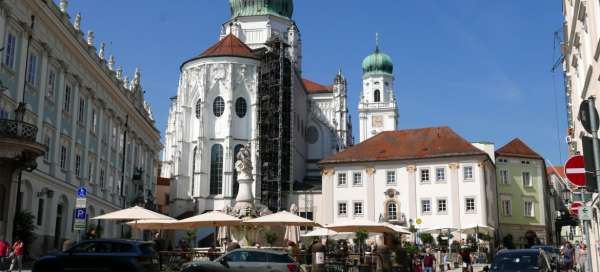
Passau is a small town by German standards – it has just over 50,000 inhabitants. However, due to its sights and picturesque location, it is very popular with tourists. The historic part of the city lies between the Danube and Inn rivers, which protected the city from both the south and the north. The inn is much more powerful here, but even so, the river after the confluence is called the Danube. Among the most famous local monuments is the Cathedral of St. Štěpán. continue reading

Trier
The oldest city in Germany
Trier is the oldest city in Germany. The city was demonstrably founded in 16 BC by the Romans, but probably several centuries earlier by the Celts. There are the remains of a Roman bath and the cathedral, which is the oldest German church. The most famous native is the philosopher and revolutionary Karl Marx. continue reading

Hamburg
Germany's second largest city
Hamburg is Germany's second largest city, its largest port and one of the three provincial federal states. It lies in the north of Germany at the lower reaches of the Elbe River at the mouth of the North Sea and has 2428 bridges, the number one of which ranks first in Europe. In the Middle Ages, it belonged to Hanza, associating major ports and trading towns in northern Germany, the Baltic and the surrounding area. continue reading

Budyšín
The most beautiful town in Upper Lusatia
Budyšín, the metropolis of the historical area of Horní Lučice (today divided between Saxony, Poland and the Czech Republic), is definitely among the most beautiful cities not only in Saxony, but in the whole of Germany. Today, Budyšín has approximately 38,000 inhabitants. It lies in a picturesque location above the river Spree. Its panorama with a large number of towers is typical. Here you will find bilingual signs – both in German and in the Slavic language of the Lusatian Serbs continue reading